
Domain Authority: Definition
Domain Authority (DA) is a search engine ranking metric used to estimate how likely a website is to rank on search engine results pages (SERPs). A higher domain authority score generally indicates a stronger ability to achieve higher rankings in organic search results.
Domain Authority Score Explained
Domain authority is measured on a scale from 1 to 100, with higher scores representing greater ranking potential. The score is calculated using multiple factors, such as the age of the domain, the number of backlinks, and the overall quality of those links.
It’s important to understand that domain authority is not a fixed score. It can increase or decrease over time as a website gains or loses links, improves content quality, or changes its SEO performance.
Key Factors That Influence Domain Authority
Several elements contribute to a website’s domain authority, including:
- Domain age: Older domains often carry more authority due to their established presence and link history.
- Link quality and quantity: Websites with a strong backlink profile from reputable and relevant sources tend to have higher domain authority.
- Content quality: High-quality, informative, and original content is more likely to earn backlinks, which positively impacts domain authority.
- User experience (UX): Easy navigation, clear structure, and usability can indirectly improve domain authority by attracting more links.
- Technical SEO: Factors such as mobile responsiveness, fast page load times, secure HTTPS connections, and proper site architecture contribute to stronger SEO performance and domain authority.
Domain Authority Alternatives
Several metrics similar to domain authority are used to estimate a website’s ranking potential on SERPs, including:
- PageRank: A metric originally developed by Google to measure the importance of web pages based on the number and quality of links pointing to them.
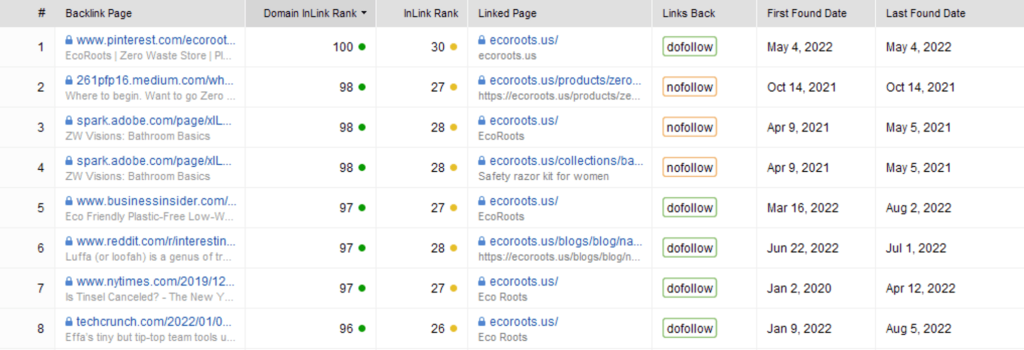
- Domain InLink Rank: A metric by SEO PowerSuite inspired by Google’s original PageRank algorithm.
- TrustRank: A score designed to measure a website’s trustworthiness based on links from reliable and authoritative sources.
- Domain Rating (DR): An Ahrefs metric that evaluates a domain’s ability to rank based on the strength and quality of its backlink profile.
- Page Authority (PA): A Moz metric that predicts how well an individual page is likely to rank in search results.
Domain Authority and SEO
While domain authority and similar metrics are useful indicators of SEO strength, they are not direct Google ranking factors and do not guarantee high rankings. Search engines evaluate many elements when ranking websites, including content relevance, search intent, technical SEO, and user engagement.
To improve SEO performance, it’s essential to focus on a balanced strategy that includes building high-quality backlinks, creating valuable content, optimizing technical SEO, and enhancing user experience—rather than relying solely on domain authority scores.